
Ventilation Assessment
ClearHome Care assesses ventilation performance across the East Midlands to help reduce condensation, support healthier homes and identify why mould may keep returning.
Ventilation is a practical differentiator in mould prevention. We look at extractor airflow, moisture removal, fan condition, room layout and everyday humidity patterns so recommendations are grounded in how the home actually works.
Free photo check available. Inspections and treatment are recommended only when they are likely to be useful.
What We Usually Find
Good ventilation removes moisture before it settles on cold surfaces. Poor ventilation lets humidity build up, especially in bathrooms, kitchens, bedrooms and rental properties with sealed windows.
Extractor fans that sound active but pull little air
A noisy fan can still underperform. Blocked grilles, dust, tired motors, poor ducting, long duct runs or missing replacement air can reduce useful extraction.
Bathroom steam lingering after use
Steam that stays in the room or spreads through the home suggests moisture is not being removed quickly enough. This can drive mould on ceilings, walls and window areas.
Condensation in bedrooms and living areas
Ventilation is not only a bathroom issue. Moist air can collect in cooler bedrooms, behind furniture and around windows when background airflow is limited.
Blocked or closed trickle vents
Trickle vents can support background ventilation, but they may be closed, blocked by blinds, painted over or absent entirely. Their condition affects air movement.
Moisture imbalance after energy upgrades
Improved insulation and sealed windows can help warmth, but they can also reduce natural air leakage. Ventilation needs to keep pace with the more airtight home.
Why The Problem Keeps Returning
Mould and condensation can return when ventilation is too weak for the moisture produced in the home. Cleaning visible mould does not change how quickly humid air is removed after bathing, cooking, drying clothes or overnight occupancy.
Ventilation problems are often missed because a fan is present and switched on. The real question is whether enough air is moving, whether it exits correctly, and whether fresh replacement air can enter the room.
Our assessment focuses on practical performance. We do not overstate what a simple check can prove, but we can identify obvious restrictions, explain likely airflow issues and recommend sensible improvements.
Our Inspection & Treatment Process
A ventilation assessment helps connect mould and condensation symptoms to airflow performance, rather than treating them as isolated stains.
Initial assessment
We ask about affected rooms, fan use, condensation timing, window habits, property type and recent changes such as new windows or insulation.
Moisture and airflow evaluation
We check visible airflow paths, extractor condition, grilles, vents, fan response, door gaps and signs of humidity buildup.
Identification of contributing factors
We identify likely restrictions such as blocked fans, weak extraction, poor replacement air, closed vents, cold surfaces or high moisture production.
Treatment recommendations
We explain whether cleaning, repair, improved use, fan upgrade, background ventilation or further specialist ventilation work may be appropriate.
Cleaning where appropriate
If a fan grille or nearby surface is blocked by dust or mould, we can advise on cleaning or carry out suitable work where within scope.
Prevention guidance
We give practical guidance on fan run-on time, door gaps, vent use, humidity management and avoiding moisture transfer between rooms.
Before, After & Airflow Evidence
Ventilation is easiest to understand when it is visible. We use simple, honest checks to show how air is moving and where performance may be limited.
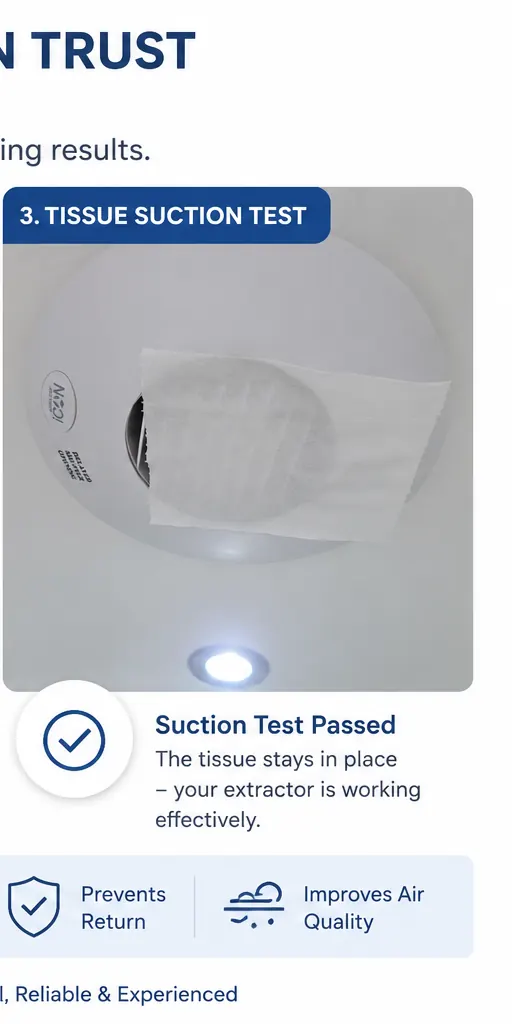
Tissue airflow checks show whether the fan pulls at the grille.
This simple test is useful for explaining airflow to occupants, landlords and agents. It is a starting point for practical ventilation advice.
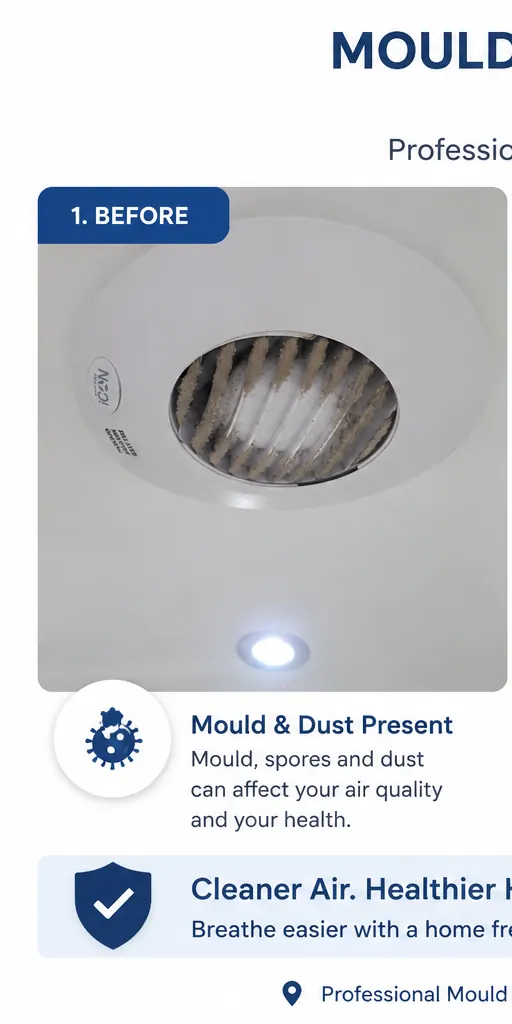
Dust and mould buildup can restrict extraction.
A blocked fan can leave shower moisture indoors and contribute to bathroom mould or condensation elsewhere in the property.
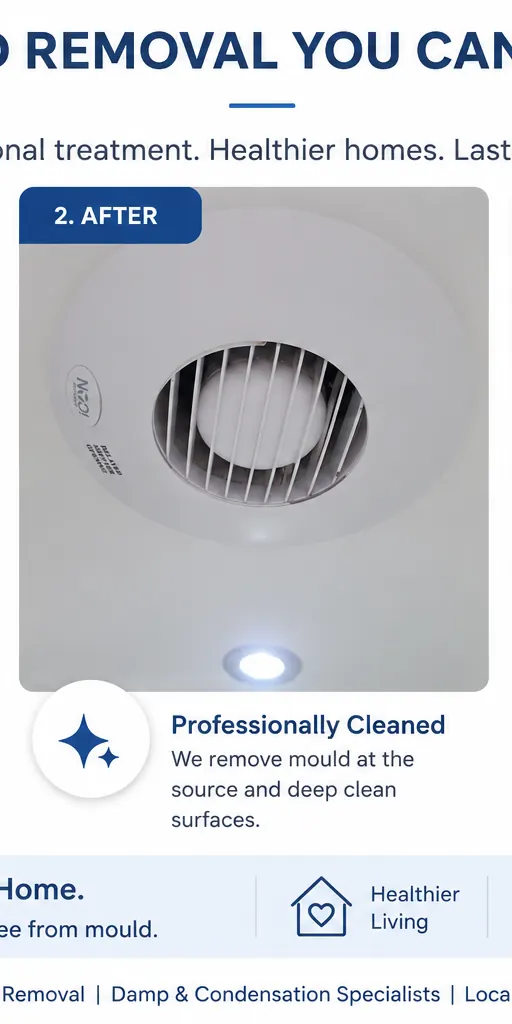
Cleaner fan paths support better moisture removal.
Where the fan and ducting are suitable, cleaning and checking airflow can be a useful low-disruption improvement.
Support For Homes, Rentals & Managed Properties
Ventilation assessments are helpful when the same mould or condensation issue keeps returning and nobody has checked whether the home can actually clear moisture.
Homeowners
We help homeowners understand whether extractor fans, trickle vents and airflow habits are contributing to condensation or mould.
Landlords
We help landlords show that ventilation has been considered and identify practical improvements for rental bathrooms, kitchens and bedrooms.
Tenants
We explain how the ventilation setup works, what may be limiting airflow and what everyday steps may help alongside property improvements.
Letting agents
We provide agent-friendly observations on fan performance, visible restrictions and recommended next actions.
Property managers
We help managers spot repeat ventilation problems across portfolios, especially in flats, HMOs and bathrooms without windows.
Local Mould, Damp & Ventilation Knowledge
We carry out ventilation assessments across Nottingham, Derby, Leicester, Mansfield, Lincoln and the wider East Midlands. From older homes with limited background ventilation to newer airtight properties, airflow is often the missing link in mould prevention.
Frequently Asked Questions
Clear answers to the questions people usually ask before booking an inspection, treatment visit or ventilation check.
What is a ventilation assessment?
It is a practical check of how air moves through affected rooms, including extractor condition, visible airflow restrictions, background ventilation and moisture patterns linked to condensation or mould.
Do you test extractor fan airflow?
We carry out practical airflow checks such as grille observation and tissue suction tests. Where detailed measured airflow commissioning is required, we can recommend appropriate specialist next steps.
Can poor ventilation cause mould?
Yes. Poor ventilation can allow moisture to build up and settle on cold surfaces, creating conditions where mould can grow.
Why does my extractor fan run but condensation stays?
The fan may be blocked, undersized, poorly ducted, switched off too soon or lacking replacement air. Sometimes the issue is a combination of fan performance and high moisture production.
Should trickle vents be open?
In many homes, open trickle vents support background airflow and help moisture escape. The best approach depends on the room, heating pattern and ventilation setup.
Can ventilation improve indoor air quality?
Good ventilation can help remove moisture and stale air. It is one part of a healthier indoor environment, alongside heating, cleaning, maintenance and moisture control.
Do bathrooms without windows need stronger extraction?
Internal bathrooms rely heavily on mechanical extraction. If the fan is weak or blocked, steam may linger and increase mould risk.
Can you recommend fan upgrades?
Yes. We can advise when a fan upgrade, cleaning, run-on adjustment or further specialist ventilation work appears sensible based on the property.
Book A Professional Inspection
We help identify mould, damp, condensation, and ventilation issues across the East Midlands with a focus on healthier homes and long-term prevention.